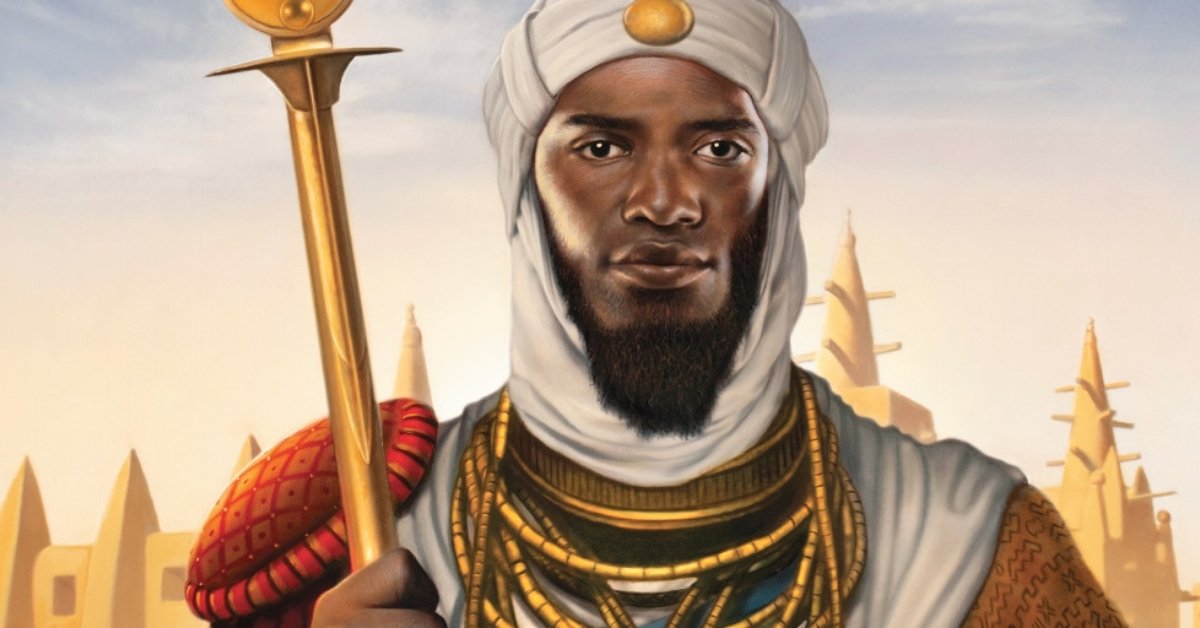
When we talk about extreme wealth, names like Jeff Bezos, John D. Rockefeller, or Andrew Carnegie often come to mind. But long before modern billionaires, there was a man whose fortune was indescribable—so vast that even today it remains impossible to pin down. Mansa Musa, the 14th Century West African ruler and King of Mali, transformed the Mali Empire into a global symbol of medieval wealth.
Reigning from 1280-1337, he controlled a 2,000 miles kingdom stretching from the Atlantic Ocean to Niger, with gold and salt resources accounting for half of Old World’s gold. His $400bn estimated wealth makes him the undisputed richest man of all time, far surpassing the fortunes of modern history’s wealthiest billionaires.
From his legendary pilgrimage to Mecca to the cultural and educational legacy he left behind, Mansa Musa wealth reshaped economies, inspired awe, and cemented his place in history. This article explores the life, riches, and enduring influence of the King of Mali—a man whose story is as grand as the treasures he commanded.
Quick Facts
| Category | Fact / Figure |
| Full Name | Mansa Musa |
| Title | King of Mali |
| Reign | 1312–1337 |
| Birth | 1280 (approx.) |
| Death | 1337 (approx.) |
| Predecessor | Mansa Abu-Bakr |
| Empire | Mali Empire |
| Territory | 2,000 miles kingdom from Atlantic Ocean to Niger |
| Key Resources | Gold and salt resources (half of Old World’s gold) |
| Estimated Wealth | $400bn estimated wealth |
| Historical Status | Richest man of all time |
| Major Pilgrimage | 1324 pilgrimage to Mecca with 60,000 men, 12,000 slaves, 100 camels carrying gold |
| Economic Impact | Cairo gold crash: $1.5bn economic losses, price of gold plummet, 10-year depreciation |
| Cultural Contributions | Djinguereber Mosque, Sankore University, education in West Africa |
| Cartographic Recognition | Catalan Atlas labeled Mali as African El Dorado |
| Key Trading Centers | Timbuktu, Gao, Djenne |
| Legacy | Influenced West African economy, culture, education, and trade |
| Comparative Wealth | Far exceeds modern billionaires like Jeff Bezos, John D Rockefeller, Andrew Carnegie |
| Geographic Influence | Senegal, Mauritania, Burkina Faso, Niger, Guinea, Ivory Coast, Sahara Desert |
The 10 Richest Men of All Time: A Glimpse into Wealth Across History
When we think of immense wealth, names like Jeff Bezos or John D. Rockefeller often come to mind. Yet, history offers figures whose wealth was indescribable—far beyond modern estimates. Among these titans, one stands out: Mansa Musa, the 14th Century West African ruler whose fortune has intrigued historians for centuries.
The Golden King: Mansa Musa Wealth and the Mali Empire
Born between 1280-1337, Mansa Musa ascended as the King of Mali, succeeding Mansa Abu-Bakr. Under his rule, the empire of Mali stretched from the Atlantic Ocean to Niger, covering a vast 2,000 miles kingdom. With gold and salt resources that accounted for half of Old World’s gold, his wealth impossible to pin down, with some estimates reaching $400bn estimated wealth.
The abundance of medieval wealth made him the undisputed richest man of all time, a title that transcends eras. His rule also fortified Mali’s reputation as a hub of trade, culture, and learning.
The Journey to Mecca: Displaying Unlimited Access to Wealth
In 1324, Mansa Musa undertook a famous pilgrimage to Mecca. His caravan was legendary: 60,000 men, 12,000 slaves, and 100 camels carrying gold. Draped in gold brocade and Persian silk, he gave generous handouts of gold along the way.
This journey not only cemented his spiritual devotion but also showcased the wealth indescribable of the King of Mali. Cities like Cairo witnessed the extravagance, highlighting a ruler with unlimited access to wealth.
The Cairo Gold Crash: Economic Impact of Mansa Musa Wealth
The caravan’s generosity had unintended consequences. In Egypt Cairo, the sudden influx of gold caused the price of gold plummet, triggering the infamous Cairo gold crash. Analysts estimate $1.5bn economic losses, with depreciation lasting a decade, wrecked the country’s economy and illustrating how medieval wealth could influence global markets.
Mansa Musa’s wealth was so extraordinary that it reshaped economies far beyond his own empire of Mali, proving the massive impact of gold and salt resources on medieval trade.
Education at Heart: The Cultural Legacy of Mali
Beyond riches, Mansa Musa was a patron of education and culture. He established institutions like the Djinguereber Mosque and Sankore University, attracting Islamic scholars to Mali. Timbuktu became a beacon of learning, enhancing education in West Africa.
Cartographers recognized Mali’s prominence: the Catalan Atlas map labeled it as the African El Dorado, and its trading centres thrived under Mansa Musa wealth. His influence ensured Mali was remembered not just for its medieval wealth, but also for its intellectual contributions.
Son of a Joiner Becomes the UK’s Richest Man: A Comparative Perspective
When comparing historical wealth, Mansa Musa dwarfs modern billionaires. Figures like Jeff Bezos, John D Rockefeller, or Andrew Carnegie are often featured on the richest billionaires list, but even their fortunes pale next to Mansa Musa wealth. Some historians suggest that Augustus Caesar’s wealth in ancient Rome comes close, yet Mansa Musa remains unrivaled as the richest man of all time.
This comparison underscores the scale of medieval wealth: a 14th Century West African ruler whose riches, accumulated from gold and salt resources, remain the standard against which extreme wealth is measured.
The Legacy Across Geography: From the Sahara Desert to West African Gold
The King of Mali’s influence extended across West Africa: from Senegal, Mauritania to Burkina Faso, Niger, Guinea, Ivory Coast, and the Sahara Desert. His trade networks and educational projects transformed regions far beyond the borders of the empire of Mali. Mansa Musa wealth wasn’t just personal—it reshaped an entire continent’s economic and cultural landscape.
Conclusion: Wealth Impossible to Pin Down
Mansa Musa stands as a testament to human ambition and the transformative power of resources. With $400bn estimated wealth, medieval wealth, and unlimited access to wealth, he remains the undisputed richest man of all time. His journey, cultural investments, and economic influence cemented the Mali Empire as one of history’s most remarkable civilizations, proving that true wealth is more than gold—it’s legacy.

Jon, the founder of Puningway, creates creative, catchy, and relatable captions that make every post stand out.